
WebtoonLib logo

Attack on Titan — Chapter 97


Attack on Titan - Chapter 97 - Part 1
Attack on Titan - Chapter 97 - Part 2
Attack on Titan - Chapter 97 - Part 3
Attack on Titan - Chapter 97 - Part 4
Attack on Titan - Chapter 97 - Part 5
Attack on Titan - Chapter 97 - Part 6
Attack on Titan - Chapter 97 - Part 7
Attack on Titan - Chapter 97 - Part 8
Attack on Titan - Chapter 97 - Part 9
Attack on Titan - Chapter 97 - Part 10
Attack on Titan - Chapter 97 - Part 11

Chapter Summary

Hey manga fam! Let's dive into what readers are buzzing about after *Shingeki no Kyojin [Official] Chapter 95*! This chapter truly pulled at the heartstrings and blurred some serious lines. 🤯

A big takeaway for many was the overarching feeling of pervasive moral decay. Readers are clearly grappling with the grim reality that "Inside and outside of the walls, all of them are corrupted." 😿 It seems like the narrative is pushing us further into a world where good and evil aren't so simple, leaving many with a sense of disillusionment.

However, amidst the widespread despair, one character really garnered a lot of empathy: Reiner. It's clear his struggles resonated deeply, with many comments simply stating they "felt sorry for Reiner." His storyline in *Shingeki no Kyojin [Official] Chapter 95* seems to have struck a chord, making his journey even more compelling. And on a crucial plot note, everyone picked up on that pivotal moment when "Reiner got Zeke’s message: they’re being heard." This development has definitely got us all on the edge of our seats, wondering what implications this message holds for the future! 👀

Chapter Analysis: Attack on Titan — Chapter 97

Chapter AnalysisAttack on Titan — Chapter 97
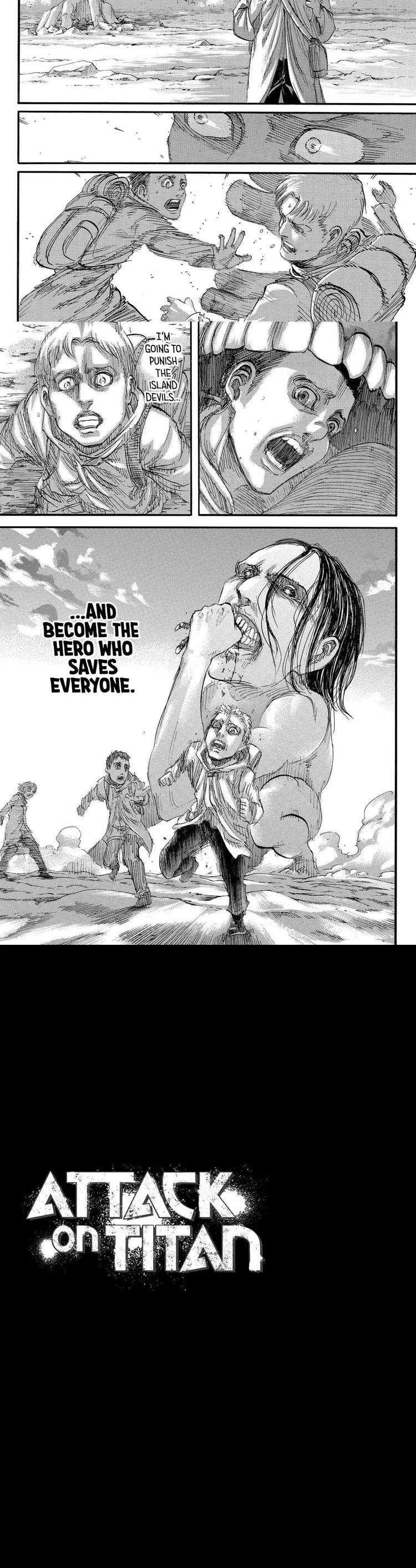
Reiner Braun has never felt more human, and that is exactly what makes Chapter 97 so devastating to read. After years of being framed as the cold Armored Titan, the traitor hiding behind a soldier's smile, Isayama strips him completely bare here. We follow a man crushed under the weight of guilt, split identity, and exhaustion, wandering through Liberio in a daze. His confession to his mother, his hollow interactions with the Warrior candidates, and his quiet breakdown all paint a portrait of a soldier who no longer believes in the cause he destroyed lives for. It is character development through collapse, and fans cannot help but empathize even while remembering what he did on Paradis. Plot-wise, this chapter functions as the calm before an inevitable storm. Marley has just won its war against the Mid-East Allied Forces, yet victory feels empty. The focus shifts to the upcoming festival hosted by Willy Tybur and the gathering of world leaders, setting the stage for a major declaration. Meanwhile, Falco continues to unknowingly act as a messenger, running letters for a wounded stranger in the basement hospital. That slow-burn tension is masterful, because readers understand the pieces are moving toward a confrontation even if the characters do not. Emotionally, the core theme is inherited guilt and the desperate search for redemption. Reiner's attempt to take his own life, stopped only at the last second by Falco's voice calling for him outside the door, is one of the most raw moments in the entire series. It is not played for shock, but for tragedy. He wants to be stopped, to be needed, to be forgiven. Artistically, Isayama leans into claustrophobic close-ups, heavy shadows under Reiner's eyes, and empty backgrounds that emphasize isolation. The contrast between flashbacks of an eager young Reiner dreaming of honor and the broken adult staring at a pistol is haunting, making this a quiet yet unforgettable chapter.