Chapter 5, often titled The Alchemist's Anguish, shifts the focus from large-scale corruption to a much more intimate and tragic misuse of alchemy, giving Edward and Alphonse their most emotionally unsettling case yet. After the relatively straightforward confrontations in Lior and Youswell, this chapter slows the pace to explore what happens when grief curdles into obsession. The brothers arrive in a quiet town plagued by rumors of disappearances and a reclusive alchemist, Majhal, who is revered by locals but feared by those who get too close to his manor.
The core of the chapter is a dark mirror for the Elrics themselves. Majhal is not a power-hungry fraud or a military schemer; he is a talented alchemist driven by love and loss, desperately trying to resurrect his deceased fiancée Karin through human transmutation and chimera research. His story forces Edward to confront his own trauma head-on. Ed's usual brash confidence and sharp tongue falter when he recognizes the same desperate logic that cost him and Al their bodies. It is a crucial moment of character development, showing Edward not just as a prodigy but as a boy still haunted by guilt, while Alphonse's quiet empathy and gentle horror highlight his role as the brothers' moral anchor. Their dynamic here is less about playful banter and more about shared pain and unspoken understanding.
Plot-wise, the chapter expands the world's rules around alchemy's taboos. It reinforces that human transmutation is not just illegal, it is fundamentally flawed and monstrous in its consequences, as seen in Majhal's grotesque, failed creations hidden in his laboratory. The tension builds from atmospheric mystery to visceral horror, culminating in a confrontation that is tragic rather than triumphant.
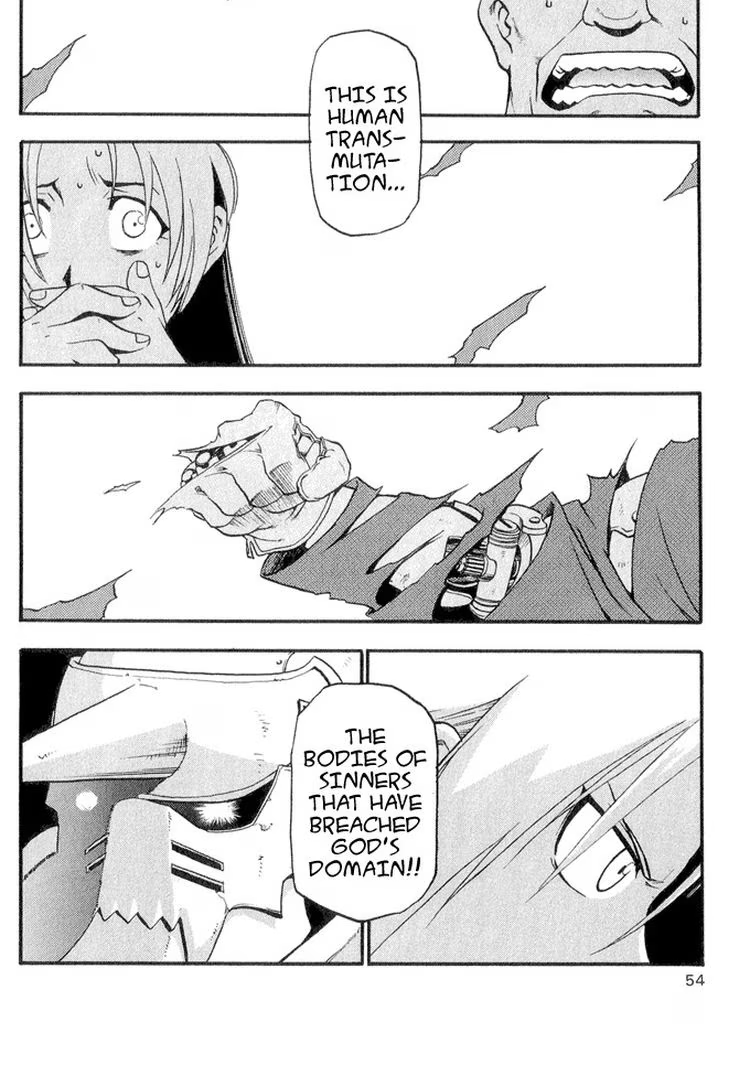
Arakawa's art shines in this chapter's contrast between beauty and horror. She renders Majhal's manor and Karin's memory with delicate, almost gothic elegance, which makes the reveal of his stitched-together chimeras all the more disturbing. The expressive close-ups on Edward's eyes, wide with recognition and dread, and Alphonse's empty armor conveying sorrow through posture alone, are masterful examples of how the series conveys deep emotion without needing words.